PDFs after all these years
I've only just realized that for years I've misunderstood, or perhaps had the wrong mental model, for the proton parton distribution functions (PDFs) and the structure of the proton. The PDF for a parton species tells us the number density of partons of that species with a fraction \(x\) of the longitudinal (or strictly speaking light-cone) momentum of the proton.
There are various sum rules that PDFs must satisfy. For example, the fractions must sum (in expectation) to one, $$ \sum_i \int_0^1 x f_i(x) \,\text{d}x = 1, $$ and there should be 2 up valence-quarks in the proton, $$ \int_0^1 \left(f_u(x) - f_{\bar u}(x)\right)\,\text{d}x = 2 $$ Now what's that formula about? Well, we don't distinguish between valence and sea quarks in the PDFs. The up quark could be created in the quark sea, popping in and out in pairs \(u\bar u\). The above formula says that the number of sea + valence up quarks minus the number of sea anti-up quarks equals 2.
The PDFs depend on a scale, however, called \(\mu\), and we write them as \(f(x, \mu)\). What's the meaning of that scale? I'd always thought of this scale as the scale at which we probed the proton. That we were observing the proton in some way that interfered with it or made it reveal different structure or that the proton was physically changing because of our probing it.
This probably won't lead to any mathematical errors, but it did leave me confused about what the structure of the proton really was. I think I almost saw it quantum mechanically, that you can't look at it without disturbing it, and that it reacted to the scale that you probed, \(\mu\).
The idea of the proton changing as we prod it is a terrible mental model; let's build a better one. What actually matters here is what we mean by a parton. We know that inside a proton, as well as the valence quarks \(uud\), there's a soup of partons popping into and out of existence; these are the sea partons. The partons are surrounded by this mess all the time. We can simplify things by saying that any mess around a parton, at energy less than \(\mu\), is just part of that parton; they are its dressing. Any mess above that scale counts as extra partons. The PDFs depend on that choice; of course they do! We are just saying here that parton distribution functions depend on how we define a parton.
Thus the hard scale is just something we pick to define what we mean by a parton. In order to make our calculations as accurate as possible, we are best to pick it to be a scale that minimizes higher-order logarithms in perturbative calculations. Formally, though, our calculations, which involve PDFs and hard scattering elements, shouldn't depend on our choice of scale, up to higher-order corrections. The DGLAP equations ensure that the scale-dependence of PDFs cancels with that of the hard-scattering elements up to higher-order corrections.
Baryogenesis, finally
Sakharov's third condition for baryogenesis [A.D. Sakharov, Zh. Eksp. Teor. Fiz. Pis'ma 5, 32 (1967); JETP Lett. 91B, 24 (1967)] is usually stated as: departure from thermal equilibrium or interactions out of thermal equilibrium or some such. I've always had some trouble with the textbook arguments for it, but I think I've now had a personal epiphany.
The textbook argument, e.g., Trodden's notes, considers the expected baryon number in equilibrium: $$ \langle B \rangle = \text{Tr}\left(e^{-\beta H} B\right) $$ Inserting an identity, \( (\text{CPT}) (\text{CPT})^{-1} \), using the cyclicity of the trace and the invariance of the Hamiltonian under CPT: $$ \begin{align} \langle B \rangle =& \text{Tr}\left((\text{CPT}) (\text{CPT})^{-1} e^{-\beta H} B\right)\\ =& \text{Tr}\left(e^{-\beta H} (\text{CPT})^{-1} B (\text{CPT}) \right)\\ =& - \text{Tr}\left(e^{-\beta H} B\right)\\ =& -\langle B \rangle \end{align} $$ and thus \( \langle B \rangle = 0 \) in equilibrium.
The thing that confused me was that it seemed that we almost begged the question. We started by assuming that \(H\) was the only relevant macroscopic parameter. We didn't include any chemical potential for baryon number in our ensemble. Suppose we took: $$ \langle B \rangle = \text{Tr}\left(e^{-\beta H + \mu_B B} B\right) $$ The partition function now no longer commutes with CPT and we cannot conclude that \(\langle B \rangle = 0\). Try it. The above argument won't go through. Can we do that? I don't think so. Sakharov's first condition for baryogenesis was that \(B\) was not conserved. In which case, there is no chemical potential in the equilibrium ensemble.
But what if we can give a chemical potential to some other conserved quantity? What? Well, \(B - L\) is a natural candidate, as unlike individual baryon and lepton number, it is conserved. In that case, we could write the expectation of baryon number as, $$ \langle B \rangle = \text{Tr}\left(e^{-\beta H + \mu_{B - L} (B - L)} B\right) $$ Because of the chemical potential, we cannot conclude that \(\langle B \rangle = 0\). Is this a loophole to Sakharov's conditions? No, we've in fact rediscovered leptogenesis! We give a chemical potential for \(B - L\) and equilibration redistributes the charges such that \( \langle B \rangle \neq 0\). We convert a \(B- L\) asymmetry to a baryon asymmetry.
Did this require a departure from thermal equilibrium? Well, under standard cosmology, there are no chemical potentials after reheating, as the inflaton decays into a hot thermal bath with no chemical potentials. Creating a chemical potential for \(B-L\) from scratch requires an out-of-equilibrium process. Thus Sakharov's third condition holds.
What if we don't assume that there are no chemical potentials after inflation? Maybe inflation can produce a chemical potential for \(B-L\)? Is that a loophole? No, we've in fact discovered inflationary baryogenesis and changed the era in which baryogenesis occurs.
What if we don't assume inflation at all? In that case, indeed, we can input what we like as an initial condition, e.g., an equilibrium state with non-zero baryon number.
Tags: baryogenesis, statistical-mechanics, physics
17 papers, 2.6 sigmas, and 1 event
The LZ experiment recently announced (1 September) a new result through a talk and preprint paper.
The paper documents something strange: a single, unexplained event that could be consistent with an interaction with a Dark Matter particle. The data were analysed using frequentist, and specifically Fisherian, statistical methods described here. In particular, evidence was quantified using a \(p\)-value, that is, the probability of obtaining data that were at least as extreme as that observed given the background-only (i.e., no Dark Matter) hypothesis. The \(p\)-value was about 0.5%. For historical reasons, this is communicated as \(2.6\sigma\), as 0.5% corresponds to the probability mass contained in the tail of a Normal distribution at \(Z = 2.6\).
Hey ho, you might think. That ain't much evidence for an extraordinary claim, especially since it is contingent on their background and detector modeling to the 1 rogue-event level, and given all we know about \(p\)-values, the replication crisis, and the strength of evidence. That said, it might just about be below a threshold proposed by Benjamin et al. (2017) in social and medical sciences, thought not close to the physics typical requirement of \(5\sigma\) for a discovery.
In the two days that followed the paper, however, there were 17 theory papers that presented particular models of Dark Matter that could explain that 1 event. Hmm. I haven't read them well enough to comment on how well-motivated these explanations are, though the most popular appears to be a Higgsino explanation (see e.g., Fan & Reece), where a supersymmetric partner of the Higgs plays the role of Dark Matter. However, a paper today suggests Higgsinos may be in tension with so-called sideband results from LZ. That means, they would predict Dark Matter signals in other searches performed by LZ, but none were seen.
There was a particular statement in Fan & Reece that caught my eye:
The look-elsewhere correction depends on the total number of models that were fit to the data, and as such is arguably too conservative when, as we will argue, there is one particularly compelling model to focus onHmm. One of the infamous things about \(p\)-values is that they depend on the experimentalists' analysis plan. That is, they depend on what the experimentalists would have done, were the data different. Part of computing them correctly thus involves correcting for the look-elsewhere effect (LEE). This means, correcting for all the things you, the experimenter, would have looked at had the data been different. There is a famous reductio ad absurdum about a statistician and electrician, by Edwards and Pratt, described here that shows how strange this can be. The long-and-short of this is that the \(p\)-value depends on the experimentalists' analysis plan, which should ideally be declared before data collection. I don't think it's reasonable to claim after the fact that
Ah! But I was only interested in this subset of tests anyway (which happened to include tests that produce the smallest \(p\)-values). Let's just use those ones. Thus the \(p\)-value is smaller!This would have been perfectly fine pre-data. I would have no objection to pre-data, or pre-unblinding of data, someone saying, let's use an analysis plan that only performs these tests to maximise the statistical power for these particular Dark Matter models that we find plausible. Post-data, however, it's too late, at least within a frequentist paradigm.
On the other hand, perhaps Fan & Reece are subconsciously thinking as Bayesians. In Bayesian frameworks, we don't need to consider the sampling plan or what we'd have done were the data different: our conclusions depend only on the data we did observe. This is connected to the likelihood principle. In that case, perhaps a more charitable interpretation is that:
Ah! I don't care about your error rates and what you'd have done were data different. I just care about what I should believe given the data at hand. The Dark Matter models that explain the event were a priori plausible to me. Given that, I am more inclined to believe that they explain the data.I think that's a defensible point of view.
Tags: dark-matter, statistics, physics
Quantum Mechanics In Your Face For Anybody
Wrote a lecture on Quantum Mechanics for a non-mathematical audience [pdf]. There are no equations and little maths beyond percentages. The key conceptual differences between Quantum and Classical Physics are there, though, and these topics require attention and serious thought.
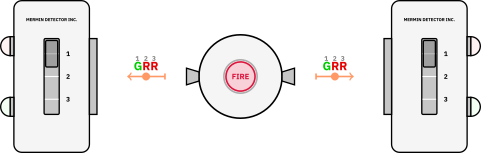
The title alludes to two wonderful expositions of quantum mechanics by the masters:
-
Bringing Home the Atomic World: Quantum Mysteries for Anybody
N. D. Mermin
Am. J. Phys. 49, 940–943 (1981)
DOI: 10.1119/1.12594 -
Sidney Coleman’s Dirac Lecture “Quantum Mechanics in Your Face”
Sidney Coleman
e-Print: arXiv:2011.12671 [physics.hist-ph]
YouTube: Sidney Coleman, Quantum Mechanics in Your Face (1994)
Mermin and Coleman are both physicists' physicists: they aren't widely known to the public, but they contributed tremendous insight and clarity. Feynman described Mermin's paper as "one of the most beautiful papers in physics."
If everything goes to plan, I'll deliver the lecture at least three times this autumn to a general audience, and perhaps use the material when I deliver the PHY301 Quantum Mechanics module, as well, which, if you're interested, follows Griffiths.
Comments, discussion and feedback are welcome, but in the original, small net way. Shoot me an e-mail. I'll be happy to hear from you, dear reader.
Tags: quantum-mechanics, physics