Hard Times
Read Hard Times by Charles Dickens over the holidays. Whilst I thoroughly enjoyed it, I don't consider it amongst my favourites of Dickens' novels. On a personal note, I was glad to have the stamina to read a classic and that my focus hasn't been entirely sapped by smartphones and the internet.

The book is set in the fictional industrial town of Coketown in the north-east of England and revolves around the factory owner, Mr. Bounderby; the utilitarian schoolmaster, Mr. Gradgrind, and his family; and an honest hand at the factory, Stephen Blackpool. Times are hard for everyone, though in different ways. Mr. Bounderby legitimizes his status and treatment of the workers by mythologizing himself in every breath and creating a ridiculous and false rags-to-riches story. Mr. Gradgrind, so committed to a utilitarian approach to education and life, deprives himself and his family of feeling and emotion. Blackpool, though honest and hardworking, becomes ostracized from the workers, wrongfully accused of robbery, and dies after falling into a dangerous disused mine shaft. The fatalistic plotlines reminded me of Thomas Hardy, as characters seemed doomed from the start.
Dickens succeeds in satirizing Bounderby and Gradgrind, and through them the utilitarian philosophy they represent, though fails to grapple with the economic and class relations that led to such hard times for all. Dickens was a reformist and his writing was his activism: he thought that through storytelling he'd change society. If we felt how Stephen Blackpool felt, we'd improve the lives of factory workers. Dickens attributed hard times to personal or idiosyncratic failings of factory owners, which could be remedied by moral suasion. He wasn't a Marxist, and didn't connect the hard times, and moral failings, to class interests and class morality, and the economic structure of the industrial town.
I can't end without mentioning Mr. Sleary and the travelling circus, the antidote to Gradgrind and Bounderby. They are, perhaps, the only characters who aren't emotionally or morally diminished by hard times, though they experience material hardship. They aren't formally educated by Gradgrind's standards but they have their fancies - their imagination, silliness, affection and feeling - which we shouldn't forget to value in our own lives.
I obtained my copy of the book through Standard Ebooks, a volunteer project to create beautiful digital editions of public domain books.
Double reading, writing and descent
There are several doubles in my title, for I've been reading two books, writing two sets of teaching notes, and thinking about double descent, the phenomenon in deep learning.
On the reading, as planned I've started a more substantial novel, Hard Times, considered by some critics to be Dickens' most complete or perfect work, since it is compact and without the sprawling plots and character ensemble of Dickens' other celebrated works. I was worried it would lack warmth and affection, but so far I am thoroughly enjoying it and its connection to educational theory.
I am also reading the wonderful Mrs Frisby and the Rats of NIMH with my daughter. This is everything a children's book should be, and I will write more when we have finished it.
As for writing, I am continuing my In Your Face For Anybody series, and am partway through an introduction to chatbots, starting with ELIZA in the 1960s and ending with contemporary large language models. It is a work in progress [pdf], but I'm enjoying creating it. The series began with my notes on quantum mechanics and Bell's theorem [pdf].
As it's the beginning of term, I also dug up my data analysis booklet for our lab students [pdf]. The booklet was inspired by one given to me in my first year as an undergraduate, though it's not as detailed or in depth, or perhaps as insightful. The ones we were given in 2005 were referred to as our red books and they were a superb practical guide to data analysis in the laboratory and some frequentist statistical concepts. I think they were written by Prof. Tom Shanks, more affectionately known as Dr. Tom at that time, though it may have been a different Tom.
Last but not least: Double Descent! This is a remarkable phenomenon in data science, that at first seems rather mysterious. Consider linear regression on \(n\) data points using \(p\) basis functions with \(p\) coefficients, $$ y = \sum_{i=1}^p \theta_i f_i(x) $$ We train our model on the \(n\) data points; select a point estimate for the parameters; and evaluate performance on a hold-out data set of another, say, \(m\) data points.
What happens when we increase \(p\) starting at \(p \ll n\)? At first, the model is under-parameterised. It lacks flexibility to fit the data points; it is biased, but not wild, that is, it does not suffer from high variance. As we increase \(p\), the performance improves as the model is sufficiently flexible to fit the data. This is the first descent.
As we increase \(p\) yet further, performance deteriorates. Our model becomes too wiggly; we are no longer primarily bias-dominated, but we suffer from variance. At \(p \approx n\), we perfectly fit the training data, but performance on the test data is poor, as we have overfit. This is the interpolation limit.
In classical statistics, that would usually be the end of the story. We find the optimal balance between bias and variance, and that's that. Here comes the twist though. Keep on increasing \(p\) beyond \(n\). Something strange can happen. The system is overparameterized and underdetermined, and there are many ways of achieving a perfect fit to the training data. The performance on the hold-out data improves; this is the second descent.
As we increase the number of basis functions, we are able to create combinations of basis functions that are smooth but perfect fits through the training data. Nothing in our training, however, favoured smoothness: we fitted to the training data without any regularization term. Why, then, are these smooth solutions selected? They are selected by the implicit bias of the gradient descent optimizer in this context. Whilst there are many solutions that perfectly fit the training data, the gradient descent algorithm is biased towards the solution that minimizes the \(L_2\)-norm of the parameters. That is a smooth solution.
The long and short of it is that by increasing \(p\) we create more possibilities for smooth functions that fit the training data perfectly and generalise well. Since we are using point estimates, there is no explicit Occam-type penalty for increasing \(p\). These smooth interpolating functions, that weren't selected or available near the interpolation threshold, are selected by the implicit bias of the optimization algorithm, and being smooth functions that fit the training data, they typically generalise well.
Tags: reading, writing, double-descent
AI & Misogyny
Read The New Age of Sexism: How the AI Revolution is Reinventing Misogyny by Laura Bates. This was an urgent and alarming book, that occasionally trod close to but avoided alarmism, about the interplay and impacts of AI and technology on sexism and discrimination.
The book at times read like a thriller: it was emotive, shocking and fast-paced, but wasn't particularly theoretical, either on technology and AI; on the causes and origins of sexism; or on our economic system and the rise of big tech and monopoly capitalism. The book works, however, as an eye-opener about where we are already headed and as a passionate call to arms to think and do something about it.
Instead of sacrificing anything and everything to the whims of men like Mark Zuckerberg, Elon Musk, Phillipp-Fussenegger, Cameron-James Wilson and a thousand others like them, instead of breathlessly enabling their ruthless pursuit of financial profit in the name of progress, we need to start from a place of sustainability, of fairness, of real, social progress, not technological development for the sake of it ...
... a different baseline of what progress looks like, what its goals are, who it serves and how it happens.
Tall Tales and Wee Stories
Read Tall Tales and Wee Stories, a collection of Billy Connolly's stand-up material. I chose it to distract myself from other matters going on, and it mostly did the trick. I didn't know many of Connolly's routines, though remember his voice and manner from TV and from some VHS tapes my parents had in the 90s.

The routines are often funny, though occasionally misogynistic to a modern reader. Obviously something is lost on the page, especially the chaos, spontaneity, and physicality of his live performance, such as the one about getting drunk from the feet upwards. I was surprised by the lack of reflection, nostalgia, politics or social commentary in his material: I presumed he'd draw on his years as a welder or his working-class upbringing, but the routines are somewhat apolitical.
I'm part way through another AI/tech/society book, and then I plan to tackle a classic: Dickens or Hardy, something like that. Connolly's book was amusing, but didn't feel altogether rewarding.
The Machine Stops
Read The Machine Stops by E. M. Forster. I hadn't previously associated him with science fiction, so it was a surprise that he wrote this book. However, the book focusses on human connections and alienation and thus perhaps isn't dissimilar thematically from his other works. The book imagines a future where we live our lives through machines, including communication and experiences. I found the Machine's preference for $n$-th hand information intriguing: first-hand and second-hand sources were considered partisan and unreliable. The society thus prefers depersonalised, smooth, generic lectures and historical accounts. Any of this sound familiar?
Neuromancer
Read Neuromancer by William Gibson (1984). A seminal, genre-defining work of cyberpunk fiction. High-tech; low-life. The book is extraordinarily fast-paced and frantic, with rapid scene switches, character aliases, and twists, and no explanatory text on the technologies or lexicon. This makes it a challenging read.

Whilst I didn't especially enjoy it as a novel, I recognized it as a masterpiece of science fiction, introducing the cyberpunk vision of the future that felt so eerily like our present. There is no sign of global governance, order, or rules; only mega-corporations that control big tech. Humans are somewhat redundant: the hyper-wealthy aristocratic Tessier-Ashpool family are cryogenically frozen, awakening only periodically to check that AIs are running their finances appropriately. On his hero's journey, our protagonist, Case, saves no one, averts no disasters, and is manipulated by AIs. I did see Case as our hero, though. He survives the ruthless criminal underworld of Chiba and chooses to take a step closer to the truth and personal meaning.
Standard Fireworks
Read Peter Kay's Diary, a very light and enjoyable read, as I was feeling somewhat stressed at work. The book is everything you would expect from Peter Kay: warm, nostalgic, and funny, with occasional more serious notes.
Peter Kay's father used to buy Standard Fireworks, which crop up in one of my favourite stories told by Bob Mortimer! As David Mitchell says, it's a funny name. Standard Fireworks: for a bonfire night you will forget!
Robot
Read Robot by Adam Wisniewski-Snerg, written in 1973 in Polish, translated into English in 1990 by Tomasz Mirkowicz, and finally published in English in 2021.
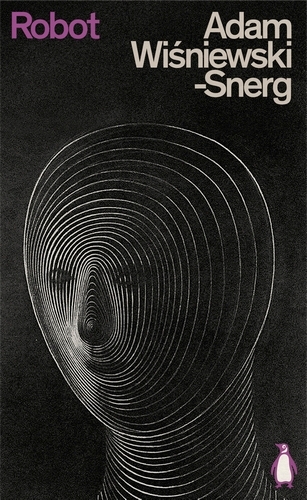
This was a challenging read. The story is deliberately disorienting and confusing, as we experience the uncertainty of the protagonist. Who is he? Is he human or robot? Are the other characters real? Are there discontinuities in their reality? There are general themes of suspicion, paranoia, identity, personal agency and free-will. The robots in question aren't the mechanical sort of the AI sort; they are biological and possess a free-will. They are created by the Mechanism to follow their own instincts and will, which will somehow fulfill the Mechanism's wishes. I did not understand the plot entirely; but maybe I wasn't supposed to.
Are we in the Shelter?
'Haven't you yet noticed,' she said after a moment, 'how some of the Shelter's inhabitants, at times needlessly, strive desperately to appear exactly who they are? Hasn't it caught your attention how carefully they affect a certain innocence, how they mask their deepest feelings, even of repugnance, and how by feigning total compliance, pretend to be busy and, when the need arises, even by shamming greed and stupidity, they do everything possible to make their behavior appear absolutely normal; in short, haven't you noticed they are doing their best to hide in the crowd?''Robot, by Adam Wisniewski-Snerg
Short stories
Read several collections of short stories. First, aborted Rudyard Kipling's Just So Stories, written in 1902. I expected colonial attitudes about e.g., seeing the animals as resource or as something to be put to work, but I didn't expect explicit racism about non-European people.
Switched to Stories for Seven Year Olds, a collection published by Harper Collins. On the whole, we enjoyed it, and discovered some interesting stories and authors. Vardiello was a highlight, as was discovering Leila Berg, an advocate of children's rights and children's literature.
For myself, read the collection The People's City, a collection of short stories centered in Edinburgh, with a rousing introduction by Irvine Welsh and contributions from Ian Rankin and Alexander McCall Smith.
Finally, attended a wonderful seminar by Jordan Stoyanov, an academic grandson of the great Kolmogorov. The talk introduced a few intriguing problems and their connections to probability theory. The problems discussed were similar to recreational maths, for example, find random variables for which $$X + Y = XY$$ with equality in distribution. These little problems are, to me, the short stories of maths. They have intrigue that captures you, but can be consumed satisfying in a single period, without multiple strands to the story line or many characters entering.
Tags: reading, short-stories, maths
The Last Bell
Read The Last Bell by Donald McRae. A thoughtful and moving book about boxers and boxing, worthy of the William Hill nomination that drew me to it. McRae is a veteran sports journalist, and writes about grief and death in his personal life and in boxing bouts that end in tragedy.

The case of Patrick Day is particularly poignant. His brothers remark that he had so many qualities that boxing didn't value. I was already conflicted and ambivalent about the sport, but no longer think noble champions, even Oleksandr Usyk, can justify or redeem it.
RIP Patrick Day.
The Church of Reason
Reading Zen and the Art of Motorcycle Maintenance. I didn't expect so much relevance to academia (though new little about the book):
The real University is not a material object. It is not a group of buildings that can be defended by police. He explained that when a college lost its accreditation, nobody came and shut down the school. There were no legal penalties, no fines, no jail sentences. Classes did not stop. Everything went on just as before. Students got the same education they would if the school didn’t lose its accreditation. All that would happen, Phaedrus said, would simply be an official recognition of a condition that already existed. It would be similar to excommunication. What would happen is that the real University, which no legislature can dictate to and which can never be identified by any location of bricks or boards or glass, would simply declare that this place was no longer “holy ground.” The real University would vanish from it, and all that would be left was the bricks and the books and the material manifestation …
The real University, he said, has no specific location. It owns no property, pays no salaries and receives no material dues. The real University is a state of mind. It is that great heritage of rational thought that has been brought down to us through the centuries and which does not exist at any specific location. It’s a state of mind which is regenerated throughout the centuries by a body of people who traditionally carry the title of professor, but even that title is not part of the real University. The real University is nothing less than the continuing body of reason itself.
Tags: reading, academia, philosophy